Development
Solid, adaptable, and scalable WordPress multisite
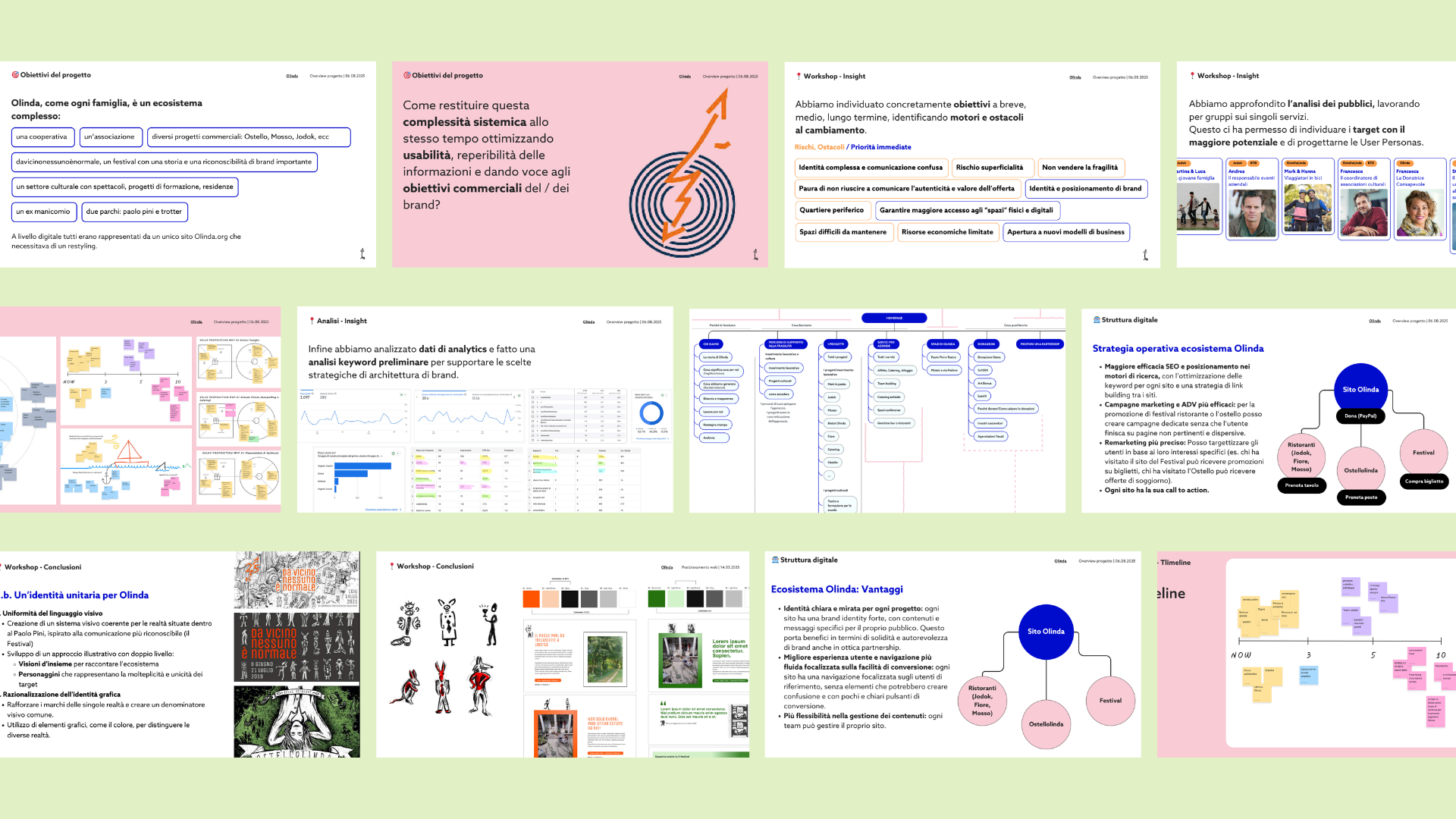
The technical architecture was designed to reflect Olinda’s modular nature. We chose to leverage the WordPress multisite infrastructure, along with our Flying framework, to centralize code management while allowing maximum expressive freedom for individual sites.
This choice provides a significant advantage in terms of economic sustainability, a crucial aspect for a Voluntary Organization (OdV): for this reason, we designed a network based on a single installation, allowing us to reduce hosting and maintenance costs compared to managing multiple separate instances. Security updates and optimizations are performed once, instantly reflecting across all nodes of the ecosystem.
Dynamic theming via CSS variables
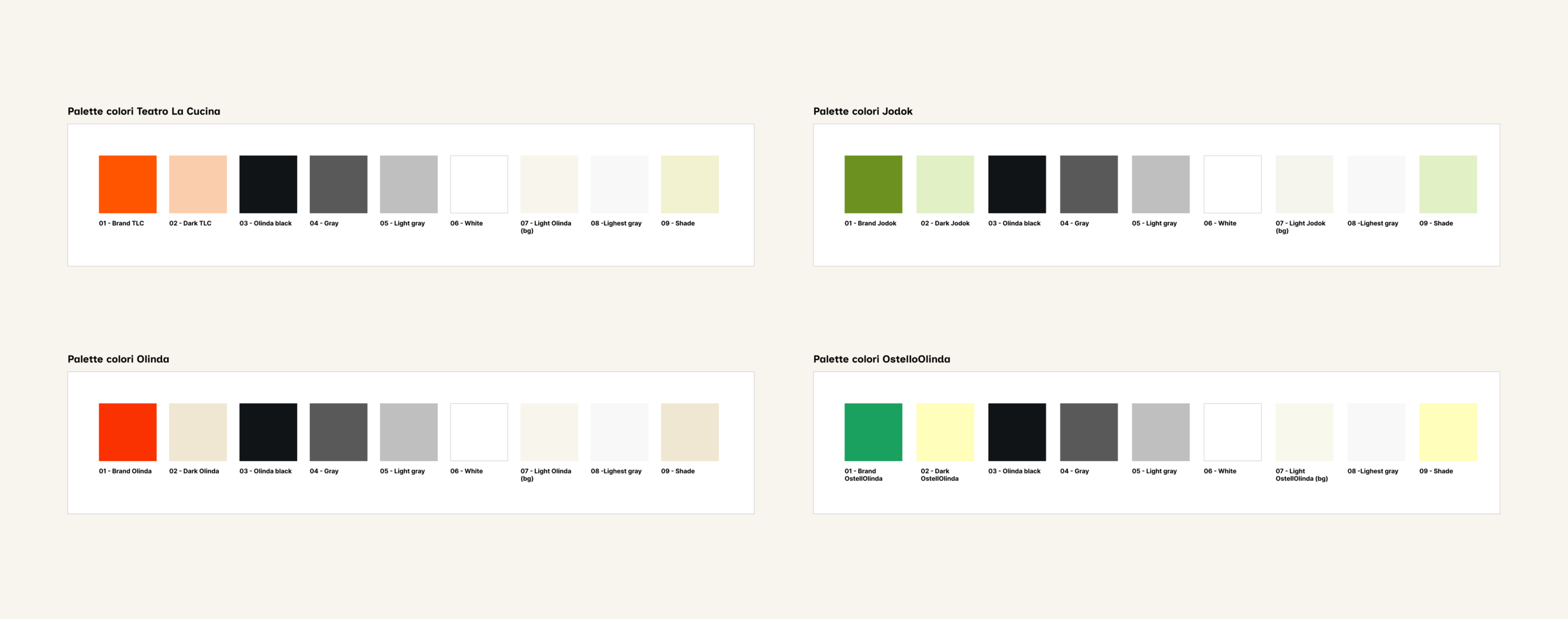
To avoid the proliferation of redundant stylesheets, we created a system of custom properties (CSS variables). This approach allows the theme core to remain unique, while the visual identity (colors, fonts, graphic assets) changes dynamically based on the class applied to the body of each site.
This architecture allowed us to centrally manage two fundamental aspects of the visual identity:
- Atomic identity: each site defines its own palette and typography (e.g., Unica One for the theater, Inclusive Sans for the hostel);
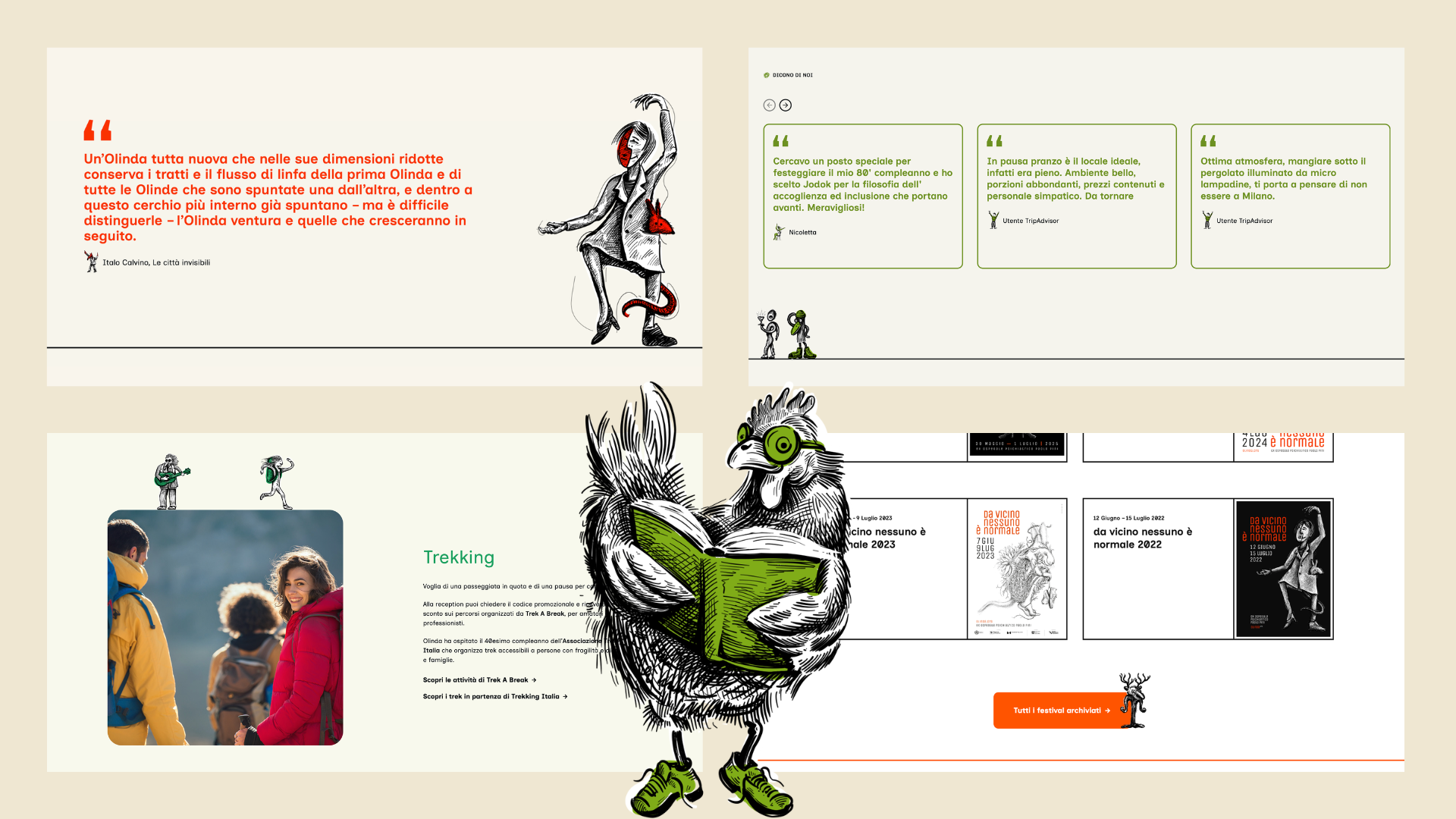
- Asset management: Carlo Gazzi’s modular illustrations are called via CSS variables, ensuring that each component (CTAs, dividers, signatures) loads the correct iconography for that specific context;
Content circulation: REST API and cross-site distribution
In an integrated ecosystem, information must not live in isolated silos. We developed an asynchronous content distribution system that allows the various sites in the network to communicate without weighing down the database.
A standout use case is the “What’s happening at Olinda” module. Through a custom integration of the WordPress REST API, we fetch news and events in real-time from the main site and distribute them across other touchpoints (Jodok, TeatroLaCucina, OstellOlinda).
The JavaScript implementation allows content to be filtered based on temporal relevance directly on the client-side, ensuring that the user sees only active initiatives while maintaining high performance during page rendering.
Operational efficiency: thanks to this architecture and the simplified management nature required by a Voluntary Organization, the workflow is streamlined to the essentials: the team publishes content once, and it is automatically propagated throughout the ecosystem, minimizing staff effort and ensuring information is always up to date.